
 EN
EN
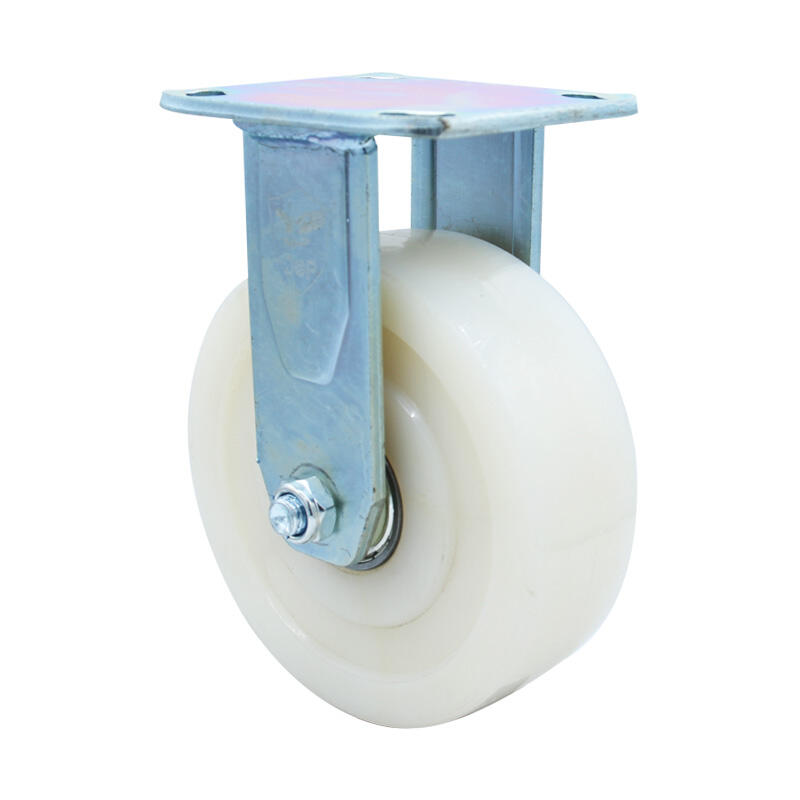
Understanding the fundamental differences between swivel and rigid casters is crucial for selecting the right mobility solution for your industrial applications. A swivel caster features a rotating mechanism that allows 360-degree movement, making it ideal for applications requiring maximum maneuverability and directional changes. In contrast, rigid casters are fixed in one direction and provide straight-line movement with enhanced stability. The choice between these two caster types significantly impacts operational efficiency, equipment performance, and workplace safety across various industrial environments.
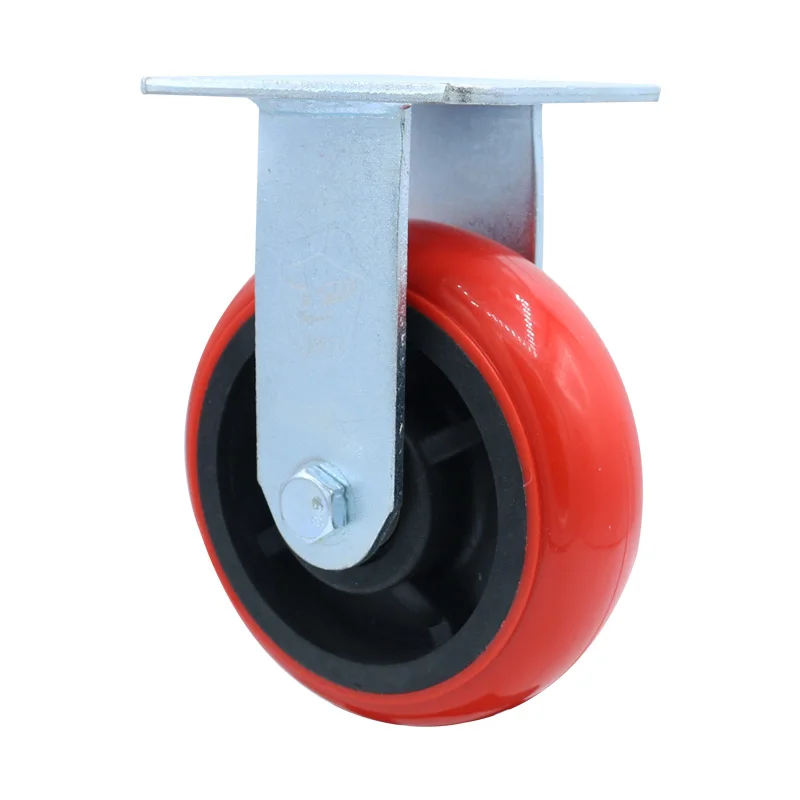
Manufacturing facilities, warehouses, and distribution centers rely heavily on material handling equipment equipped with appropriate caster configurations. The decision to implement a swivel caster versus a rigid caster depends on multiple factors including load capacity requirements, floor conditions, operational frequency, and specific mobility needs. Industrial professionals must evaluate these considerations carefully to optimize equipment performance and minimize maintenance costs while ensuring worker safety and operational reliability.
Understanding Swivel Caster Mechanics and Functionality
Rotation Mechanism and Design Features
The defining characteristic of a swivel caster lies in its rotating top plate assembly that enables full 360-degree rotation around a vertical axis. This rotation mechanism consists of a bearing race system, typically featuring ball bearings or roller bearings that facilitate smooth directional changes under load. The swivel caster design incorporates a kingpin assembly that connects the wheel fork to the top mounting plate, allowing the wheel to pivot freely while maintaining structural integrity under various load conditions.
Advanced swivel caster designs include features such as grease fittings for maintenance accessibility, offset mounting configurations for improved tracking, and reinforced construction materials to withstand demanding industrial applications. The bearing system quality directly influences the caster's operational lifespan and performance characteristics, with precision-engineered bearings providing smoother operation and reduced rolling resistance compared to standard bearing configurations.
Load Distribution and Weight Capacity
A properly designed swivel caster distributes loads through its mounting plate and bearing assembly, transferring weight forces through the kingpin mechanism to the wheel contact point. Load capacity ratings for swivel casters vary significantly based on construction materials, bearing quality, and wheel specifications, with heavy-duty industrial models supporting loads ranging from several hundred to thousands of pounds per caster unit.
The dynamic load characteristics of a swivel caster differ from static load ratings, as rotational forces and directional changes create additional stress on the bearing assembly and mounting components. Understanding these load dynamics helps industrial professionals select appropriate caster configurations that maintain performance reliability throughout extended operational periods while preventing premature component failure or safety hazards.
Optimal Applications for Swivel Caster Implementation
Material Handling and Cart Applications
Material handling carts and trolleys represent ideal applications for swivel caster implementation, particularly in environments requiring frequent directional changes and precise positioning capabilities. Manufacturing assembly lines benefit significantly from swivel caster equipped workstations that enable operators to easily reposition equipment and materials without excessive physical effort or time consumption.
Warehouse picking carts utilize swivel caster configurations to navigate narrow aisles and tight turning radiuses, improving operational efficiency and reducing worker fatigue during extended picking operations. The maneuverability advantages of a swivel caster become particularly evident in congested work areas where equipment must frequently change direction or navigate around obstacles and other mobile equipment.
Medical and Laboratory Equipment
Healthcare facilities extensively utilize swivel caster equipped equipment for patient transport, medical cart mobility, and laboratory instrument positioning. The precise maneuverability offered by a swivel caster enables healthcare professionals to position equipment accurately in confined spaces while maintaining smooth, quiet operation that minimizes disruption in sensitive environments.
Laboratory applications require swivel caster solutions that provide chemical resistance, precision movement, and contamination prevention capabilities. Specialized swivel caster designs for laboratory use incorporate sealed bearing systems and corrosion-resistant materials that withstand exposure to cleaning agents and chemical substances while maintaining operational reliability throughout demanding research and testing procedures.
Rigid Caster Advantages and Limitations
Directional Stability and Load Support
Rigid casters excel in applications requiring directional stability and straight-line movement, providing superior load support capabilities compared to swivel caster alternatives in many heavy-duty applications. The fixed wheel orientation eliminates rotational stress on the mounting assembly, enabling rigid casters to support higher load capacities while maintaining structural integrity under continuous operation conditions.
Industrial conveyor systems and production line equipment frequently utilize rigid caster configurations to ensure consistent directional movement and prevent unwanted lateral drift during material transport operations. The inherent stability of rigid casters makes them particularly suitable for applications where precise tracking and directional control take priority over maneuverability requirements.
Maintenance and Operational Simplicity
The simplified design of rigid casters results in reduced maintenance requirements compared to swivel caster mechanisms, as the absence of rotating components eliminates bearing lubrication needs and reduces potential failure points. This maintenance advantage translates to lower operational costs and improved equipment reliability in demanding industrial environments where continuous operation is essential.
Rigid caster installations provide predictable performance characteristics and simplified troubleshooting procedures, making them preferred choices for applications where maintenance access is limited or specialized technical support is unavailable. The straightforward design facilitates rapid replacement procedures and reduces inventory requirements for spare parts and maintenance supplies.
Performance Comparison and Selection Criteria
Maneuverability Versus Stability Trade-offs
The fundamental trade-off between swivel caster maneuverability and rigid caster stability influences equipment design decisions across numerous industrial applications. A swivel caster provides exceptional directional flexibility at the expense of some load stability, while rigid casters offer maximum stability with limited directional adjustment capabilities.
Hybrid configurations combining both swivel caster and rigid caster elements on the same equipment platform optimize performance characteristics by balancing maneuverability needs with stability requirements. These mixed configurations typically position swivel casters at equipment corners requiring directional adjustment while utilizing rigid casters for primary load support and directional control.
Floor Surface and Environmental Considerations
Floor surface conditions significantly impact swivel caster performance, with smooth, level surfaces enabling optimal rotation and maneuverability characteristics. Uneven or debris-laden floors can impede swivel caster rotation and create operational challenges that reduce the mobility advantages typically associated with swivel caster implementations.
Environmental factors such as temperature extremes, chemical exposure, and moisture conditions affect both swivel caster and rigid caster performance, requiring careful material selection and design consideration to ensure long-term reliability. Specialized swivel caster designs incorporate environmental protection features such as sealed bearings and corrosion-resistant coatings to maintain performance in challenging operational conditions.
Installation and Configuration Best Practices
Mounting Requirements and Load Distribution
Proper swivel caster installation requires adequate mounting plate surface area and appropriate fastener selection to distribute loads effectively and prevent mounting failure under operational stress. The mounting configuration must accommodate the rotational clearance requirements of the swivel caster while providing sufficient structural support for the intended load capacity.
Load distribution considerations for swivel caster installations include evaluating weight placement, center of gravity location, and dynamic load factors that influence caster performance during operation. Uneven load distribution can cause premature wear on swivel caster components and create operational instability that compromises safety and performance reliability.
Maintenance Scheduling and Performance Monitoring
Regular maintenance schedules for swivel caster equipped equipment should include bearing lubrication, rotation mechanism inspection, and wear pattern evaluation to identify potential issues before they impact operational performance. Preventive maintenance programs extend swivel caster service life and maintain optimal performance characteristics throughout extended operational periods.
Performance monitoring procedures for swivel caster applications include tracking rotation smoothness, load capacity maintenance, and operational noise levels that indicate bearing condition and overall caster health. Early identification of performance degradation enables timely maintenance intervention and prevents costly equipment downtime or safety hazards.
FAQ
What load capacity differences exist between swivel and rigid casters?
Rigid casters typically support higher load capacities than swivel caster alternatives due to their simplified design and direct load transfer path. A swivel caster distributes loads through additional bearing components and rotation mechanisms, which can reduce overall load capacity but provides superior maneuverability. Industrial applications requiring maximum load support often utilize rigid casters for primary load bearing while incorporating swivel casters for directional control.
How do floor conditions affect swivel caster performance?
Floor surface quality significantly impacts swivel caster operation, with smooth, clean surfaces enabling optimal rotation and maneuverability. Debris, uneven surfaces, or damaged flooring can impede swivel caster rotation and create operational challenges. A swivel caster performs best on well-maintained floors with minimal obstacles, while rough or contaminated surfaces may favor rigid caster applications that avoid rotational complications.
What maintenance requirements distinguish swivel from rigid casters?
A swivel caster requires more frequent maintenance than rigid alternatives due to its rotating bearing assembly and kingpin mechanism. Regular lubrication, bearing inspection, and rotation mechanism cleaning are essential for maintaining swivel caster performance. Rigid casters have simpler maintenance needs focused primarily on wheel condition and mounting integrity, making them suitable for applications with limited maintenance access or resources.
Which caster type works better for mixed industrial applications?
Hybrid configurations combining both swivel caster and rigid caster elements often provide optimal performance for mixed industrial applications. A swivel caster placement at equipment corners requiring directional adjustment, combined with rigid casters for primary load support, balances maneuverability needs with stability requirements. This configuration approach maximizes operational flexibility while maintaining load capacity and directional control characteristics essential for demanding industrial environments.